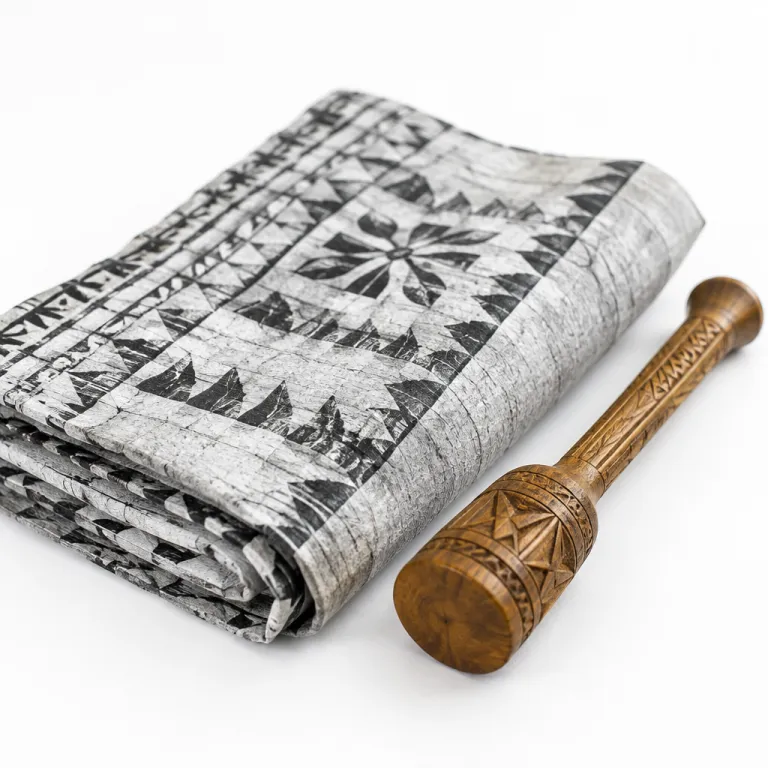
What masi tapa cloth in Fiji really is
Masi is the Fijian name for a ceremonial cloth made from tree bark, and you will see this masi tapa cloth in Fiji framed in lobbies or wrapped around pillars. The material belongs to a wider Pacific tradition of tapa cloth, where artisans across islands such as Tonga and Samoa beat the inner bark of the paper mulberry tree into a supple fabric that feels like something between paper and leather. When you walk into a luxury resort on any island, that large decorated panel behind reception is rarely just décor ; it is usually a piece of living barkcloth carrying deep cultural meaning.
The process starts with the paper mulberry trees that grow in village gardens, where women work to cut young trunks and strip away the inner bark. This inner bark is soaked, scraped, and then laid over a wooden anvil, where tapa making begins with the rhythmic sound of a wooden mallet striking the fibres until they fuse into a single sheet of bark cloth. In many parts of Fiji, this work remains a communal activity, and you may hear the steady beat of tapa art long before you see the finished cloth.
Once the fabric has been formed, it is dried and then decorated with natural pigments, turning plain bark paper into richly patterned fijian masi. Artisans use stencils, freehand painting, and rubbing techniques to create geometric motifs that echo the shapes of islands, trees, and waves, and these designs transform simple barkcloth into a visual language. When you see masi tapa cloth in Fiji hanging in a resort suite, you are looking at a story told in earth tones, where every line and triangle has been placed with intention.
Ceremonial roles of masi in Fijian life and resort rituals
Across Fiji, masi is not just fabric ; it is a ceremonial presence that moves with people through life. At weddings, births, and chiefly installations, large rolls of fijian tapa cloth are presented to families and to the chief as a sign of respect, and the quantity and quality of the bark cloth signal the depth of the relationship. When you attend a resort hosted kava or lovo evening, you may notice guests seated on decorated mats and masi panels, which quietly anchor the event in local cultural practice rather than pure performance.
Patterns on masi tapa cloth in Fiji are never random, and each island group has its own visual dialect. Certain motifs are associated with a chief or a clan, while others reference the sea, the mulberry trees, or the island landscape, and these designs help distinguish masi from Tonga or Samoa, where tapa cloth traditions follow different rules. When a resort commissions fijian masi for a lobby or a spa, the best properties work with local elders to ensure that the motifs used are appropriate for a public space and not reserved for chiefly or funerary contexts.
As a guest, you may be invited to ceremonies where masi is exchanged, and this is where the material steps out of museum art territory and into daily life. Some high end properties now pair their lovo feasts with short explanations of the masi kuvui, a smoked and darkened form of barkcloth once reserved for high ranking families, and this context helps you read the cloth as more than a backdrop. If you are choosing between resorts, look for those that treat masi as part of a wider cultural program, not just as a neutral piece of fabric under your welcome drink ; guides on what a lovo actually tastes like and which resorts do not phone it in can be a useful indicator of that seriousness.
Who still makes masi and where the pressure comes from
On many Fijian islands, tapa making remains primarily the domain of women, and the sound of a wooden mallet on a wooden anvil still marks the rhythm of village days. In some communities, younger women work alongside grandmothers to strip bark from the mulberry tree, soak the inner bark, and stretch it into long sheets that will later become decorated masi tapa. This intergenerational transmission is fragile, though, because imported printed fabric and synthetic wall hangings can undercut the value of hand beaten barkcloth.
Resorts across Fiji often face a choice between commissioning authentic fijian masi and buying cheaper, machine printed imitations that mimic tapa art patterns without any of the cultural weight. When you see identical panels repeated across multiple properties or sold in airport shops, you are likely looking at bark paper substitutes or printed fabric that has never touched a paper mulberry tree. The pressure on artisans increases when guests treat masi tapa cloth in Fiji as a generic souvenir, rather than as the result of time consuming women work that depends on healthy mulberry trees and community support.
Some cultural centres and galleries now act as intermediaries, helping connect resorts and travelers with villages that still specialise in islands tapa traditions. These spaces sometimes present masi alongside museum art from Tonga and Samoa, highlighting both shared roots and regional distinctions within the wider tonga samoa barkcloth world. If your resort offers a meke night or cultural performance, ask whether the masi costumes and tapa cloth backdrops were commissioned locally ; guides on how to tell if a meke night at your resort is the real thing can help you read the difference between staged fantasy and genuine collaboration.
How luxury resorts can honour masi as living culture
High end properties in Fiji increasingly understand that guests notice when cultural elements feel tokenistic, and masi is often the first test. A lobby wrapped in generic decorated panels that could come from any Pacific island signals a missed opportunity, while a space that features named artisans, specific island origins, and clear explanations of motifs shows respect for fijian tapa knowledge. When a resort invests in long term relationships with villages that grow paper mulberry trees and practice tapa making, the result is usually deeper storytelling and better design.
Thoughtful properties integrate masi tapa cloth in Fiji into their architecture, pairing barkcloth wall hangings with natural timber, stone, and open air layouts that echo traditional island forms. Some commission large scale tapa art installations that reference the surrounding islands, the local chief, or the nearby reef, and these pieces often become focal points for guided cultural walks through the property. If you are researching where to stay, look for hotels that talk openly about their design collaborations ; resources on architectural wonders in Fiji’s luxury hotels can reveal which properties treat masi as a structural narrative, not just an afterthought.
Workshops are another strong indicator of authenticity, especially when they allow guests to handle raw bark, see the inner bark being beaten, and understand the difference between bark cloth and printed fabric. A well run session will explain how the mulberry tree is planted, harvested, and regenerated, and why certain islands specialise in particular styles of fijian masi or masi kuvui. When a resort team can walk you through the full journey from tree to cloth, you are far more likely to leave with a responsible purchase and a story that extends beyond your suite walls.
How the solo explorer can meet makers and buy responsibly
Traveling alone in Fiji gives you the freedom to follow the sound of the wooden mallet beyond the resort gate. Local markets on the main island and outer islands often feature stalls where women work on small pieces of masi tapa, and you can sometimes watch as they transform bark paper into finished cloth while chatting about their village and family. When you see the labour involved, the price of a hand painted panel starts to make more sense than the cheaper printed alternatives.
Before buying, ask where the paper mulberry trees are grown and whether the barkcloth was made in the same village or purchased from elsewhere, because this helps you trace the full chain from mulberry tree to finished tapa cloth. Responsible sellers will usually explain how they harvest the inner bark without damaging the trees, and how they share income among the women who participate in tapa making. If a vendor cannot answer basic questions about the origin of the masi tapa cloth in Fiji, you may be looking at imported fabric rather than genuine fijian masi.
Many artisans now use facebook and Instagram to showcase their tapa art, which can be helpful if you want to stay in touch after your trip or commission a piece sized for your home. When you follow these makers online, you see how islands tapa traditions adapt to new markets while still remaining rooted in cultural protocols and respect for the chief and community. Buying directly from such artists, whether in person or later through social media, keeps the value of the bark cloth within the village economy and supports the trees, skills, and stories that sustain it.
Reading patterns and engaging with masi beyond the lobby
Once you start paying attention, the motifs on masi tapa cloth in Fiji become a map to the islands and their histories. Triangles may echo the teeth of a shark or the peaks of distant trees, while repeating borders can reference the flow of a river or the authority of a chief, and these patterns differ subtly between Tonga, Samoa, and Fiji. Asking your guide or a village elder to explain a single motif often opens a longer conversation about land, lineage, and the responsibilities that come with wearing or displaying certain designs.
In resort settings, you can engage more deeply by seeking out staff who come from masi making communities and inviting them to share their own experiences of barkcloth. Some will talk about childhood memories of sitting beside a wooden anvil, watching older relatives beat the inner bark into fabric, or about the pride of seeing their village’s fijian tapa hanging as museum art in galleries abroad. These conversations turn what might have been anonymous décor into a personal connection, and they help you navigate when it is appropriate to sit on, wear, or photograph particular pieces of bark cloth.
For travelers who care about cultural integrity, the goal is to treat masi as a living practice rather than a static souvenir. That means respecting protocols around chiefly masi kuvui, understanding that some islands tapa designs should not be copied casually, and recognising the ongoing labour of women work behind every sheet of decorated bark paper. When you carry that awareness back home, the masi tapa cloth from Fiji on your wall becomes less an object and more a continuing relationship with the people, trees, and islands that shaped it.
FAQ
What is masi made from in Fiji ?
Masi in Fiji is made from the inner bark of the paper mulberry tree, which is soaked, scraped, and beaten into a single sheet of barkcloth. Artisans use a wooden mallet and wooden anvil to fuse the fibres into a strong yet flexible fabric. The finished bark cloth is then decorated with natural pigments to create distinctive fijian masi patterns.
How can I tell if masi is authentic or printed ?
Authentic masi tapa cloth in Fiji usually shows slight irregularities in thickness and pattern, and you can often feel the layered fibres of the bark rather than a smooth synthetic surface. Printed fabric imitations tend to have perfectly repeated designs and a more uniform, textile like feel, sometimes closer to standard fabric than to bark paper. When in doubt, ask the seller about the village where the paper mulberry trees were grown and how the tapa making was done.
Is it respectful to buy masi as a souvenir ?
Buying masi can be very respectful when you purchase directly from artisans or trusted cooperatives that support village economies. You should avoid designs reserved for chiefly or funerary use, and instead choose pieces that makers identify as suitable for sale and display. Paying a fair price for genuine barkcloth helps sustain mulberry trees, women work, and the wider cultural practice.
Where can I see high quality masi while staying at a resort ?
Many luxury resorts in Fiji display large panels of fijian tapa in their lobbies, spas, and event spaces, often commissioned from specific island communities. Some properties partner with cultural centres that also present tapa art from Tonga and Samoa, allowing you to compare regional styles of bark cloth. When researching hotels, look for those that explain the origin of their masi and offer guided cultural tours or workshops.
Can I visit a village to watch masi being made ?
Several resorts and tour operators arrange visits to villages where tapa making is still practiced, especially on islands with strong masi traditions. During these visits, you may see the full process from harvesting the mulberry tree bark to beating and decorating the cloth, and you can often buy directly from the women who created it. Always follow local guidance on photography and participation, as masi production is both daily work and a cultural activity.