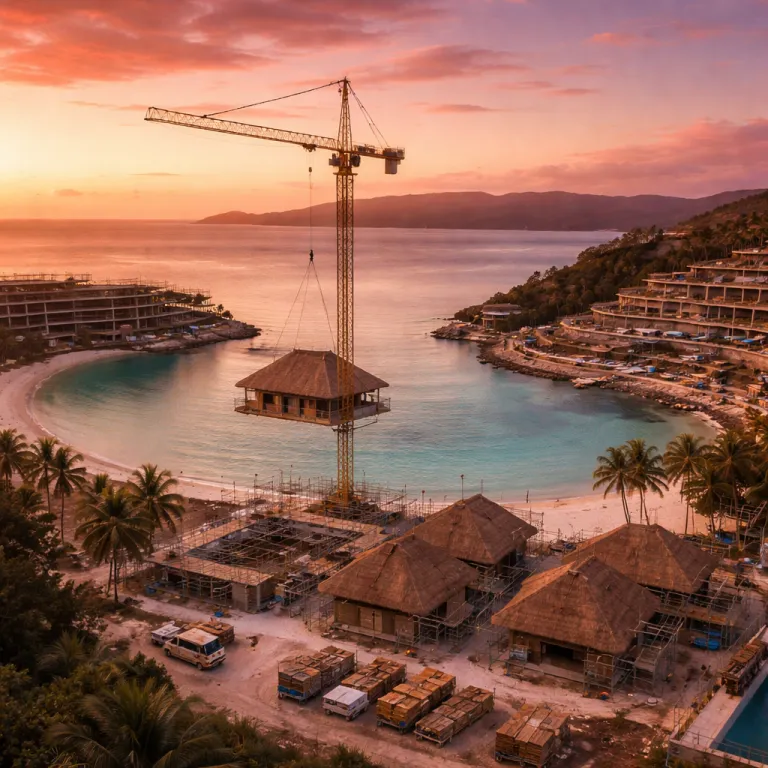
Fiji Luxury Brands 2026: What Global Names Mean for Island-Style Luxury
Fiji at a crossroads for branded luxury
Fiji is entering a decisive phase where global hotel names meet deep island style. Over the next few years, the arrival of a planned Ritz-Carlton resort on the Coral Coast (flagged in 2024 investment briefings with an indicative 150–180 keys), a proposed One&Only retreat in the Yasawa island chain, a Westin-branded property on Viti Levu and Accor’s planned Vatu Talei development will test whether Fiji luxury brands 2026 strengthen or dilute what makes this archipelago singular. For guests planning a premium resort stay, this is not an abstract debate but a practical question about which ocean-facing room, which reef, which guest experience will still feel unmistakably Fijian.
These new Fiji luxury resorts 2026 bring serious capital, polished modern luxury and global loyalty programmes into a market long defined by independent island retreats and private family-run properties. The four-resort wave will more than triple the branded top-tier capacity on Viti Levu and in the Yasawas, shifting the balance between international brand standards and the slower, more natural rhythm of Fijian hospitality. If you care about the best kind of luxury in Fiji, you should care about how these brands set expectations for service, sustainability and cultural respect in the coming year.
Ritz-Carlton on the Coral Coast is expected to lean into expansive suites, large-scale wellness and curated sunset cocktails on wide decks that frame the reef like theatre, with early concept plans pointing to multiple dining venues and a signature spa. One&Only in the Yasawas is expected to position itself as the remote icon, selling the wild ocean horizon and helicopter-only access as the ultimate private island experience. Westin on Viti Levu and Accor’s Vatu Talei will target business-leisure travellers who want a short transfer from Nadi, a recognisable brand and a reliable guest experience that feels familiar yet still speaks softly of Fiji and island style.
What global brands add — and what they risk erasing
Each incoming brand arrives with a playbook that has worked in other resort markets, from the Maldives to Mauritius. Ritz-Carlton will emphasise refined service rituals, layered room categories and a carefully choreographed luxury journey that moves guests from spa to reef to restaurant with frictionless ease. One&Only will trade on its reputation for private villas, family-friendly programming and a sense of theatrical arrival that turns the entire Vomo-style experience of seaplane landings and jetty welcomes into a branded moment.
Those strengths can also flatten nuance when they land on a small island nation like Fiji, where the best properties have grown out of specific communities, reefs and family histories. A Westin on Viti Levu can easily become a self-contained resort bubble, where guests never leave the manicured grounds and only meet Fijians in uniform rather than in villages or on fishing boats. Accor’s Vatu Talei, if it follows the usual template, will foreground spa menus and pool bars while the deeper stories of the surrounding island, its reef health and its traditional landowners risk becoming background colour instead of the main narrative.
Contrast that with a place such as Navini Island Resort, a serene private island escape where the entire guest experience is built around the reef, the small scale of the island and the sense of being welcomed into a family rather than processed by a brand. When you book a stay there, you feel the love for the ocean in the way staff talk about tides, coral and fishing taboos, not in a scripted sustainability line. In a 2024 Tourism Fiji stakeholder session, one village representative described this approach simply: “If the reef is healthy and the stories are alive, the resort will always be full.” As branded resorts in Fiji expand, the question is whether new developments will learn from these island boutique-style operations or simply outcompete them with larger marketing budgets and shinier modern luxury hardware.
The economic case, the cultural cost and the Maldives warning
The economic argument for this branded wave is clear and powerful. High-profile Fiji luxury brands 2026 promise more jobs, higher average daily rates and increased tax revenue that can, in theory, fund reef conservation and community projects across multiple islands. According to Fiji Bureau of Statistics data cited in a 2025 Pixidia tourism brief on premium and Coral Coast hotels, visitor arrivals in August 2025 reached 99,737, a 5.2% increase on the same month the previous year, a sign that demand for luxury and premium experiences in Fiji is rising rather than plateauing.
There is also a strong case that competition from Ritz-Carlton, One&Only, Westin and Accor will lift operational standards for existing resorts, from food safety to spa training to digital booking flows. When a guest can compare a Vomo Island stay with a Coral Coast Ritz-Carlton on the same screen, details such as response times, pre-arrival communication and the clarity of modern luxury offers suddenly matter more. For travellers using curated platforms like myfijistay.com, which already tracks luxury and premium hotel booking trends and exclusive experiences, this competition can translate into sharper value and more transparent inclusions.
The cultural and environmental cost is harder to price but just as real, and the Maldives offers a cautionary tale. Once overwater villas and big-name brands arrived there in clusters, many smaller island-style properties were pushed to the margins, and the guest experience became interchangeable from one resort to the next. Fiji still has a chance to avoid that fate by insisting that every new brand set measurable commitments to reef protection, local ownership stakes and cultural programming that goes beyond a weekly meke show and generic sunset cocktails on the deck. Where specific metrics such as percentage of local equity, annual reef-monitoring targets or minimum local employment ratios are not yet disclosed in project summaries, travellers should treat that lack of detail as a prompt to ask direct questions before they book.
How to book smart in the era of fiji luxury brands 2026
For business-leisure travellers extending a Nadi meeting into a long weekend, the new landscape of Fiji luxury resorts 2026 can feel crowded. The key is to decide whether you want a recognisable brand with predictable service or a more intimate island boutique-style property where the owner might join you for a drink. Start by mapping your priorities across three axes: access, reef quality and cultural depth, then match each resort or group of resorts to those needs.
If you value speed and efficiency, a Westin or Vatu Talei stay on Viti Levu, combined with streamlined tools like self-service check-in now landing in Fiji’s airports, can minimise transfer friction and maximise pool time. Travellers who care more about the natural environment and the best snorkelling should look closely at Yasawa and Mamanuca options, including independent places and branded newcomers, and ask pointed questions about reef monitoring, fishing limits and waste management. When you compare a Vomo experience or a Six Senses Fiji superyacht charter with a larger Coral Coast resort, you are really choosing between two definitions of luxury: hardware-driven modern comfort versus relationship-driven guest experience.
One practical filter is to look at how each property talks about love for place, not just love for pampering. Does the resort highlight family connections to the land, or only its spa menu and ocean views? Does it partner with local designers such as Ledua Daurewa or jewellery houses like Adorn Pacific, or does every retail space feel like an airport duty-free brand wall? As one Tourism Fiji representative put it at a recent industry briefing, “Our future depends on guests leaving with a real connection to our communities, not just a memory of a nice pool.” What luxury experiences are available in Fiji? Superyacht stays, eco-resorts and fashion events now sit alongside traditional five-star resorts in the country’s premium offering.
Key figures shaping Fiji’s luxury hotel future
- Visitor arrivals to Fiji in August 2025 reached 99,737 visitors, representing a 5.2% increase compared with the same month the previous year, a clear signal that demand for higher-end stays is growing (Fiji Bureau of Statistics monthly visitor arrivals release, summarised in Pixidia analysis of Fiji luxury resorts 2026).
- Six Senses Fiji is using Mischief, a superyacht dedicated to exclusive stays during the June to October season, as a floating extension of its resort inventory, illustrating how sea-based capacity now complements land-based luxury rooms (as reported in Six Senses Fiji trade communications and 2024 product updates).
- Fiji Fashion Week, held each April in Nadi, anchors the calendar for local luxury brands such as Adorn Pacific and designer Ledua Daurewa, tying resort demand to fashion and jewellery events that attract high-spending guests and media attention.
- Tourism authorities and partners report that sustainable luxury, exclusive experiences and local designer prominence are now three core pillars of Fiji’s positioning, aligning new branded resorts with eco-resorts and independent island properties, even though detailed targets for local ownership and reef health are still being developed in formal policy documents.