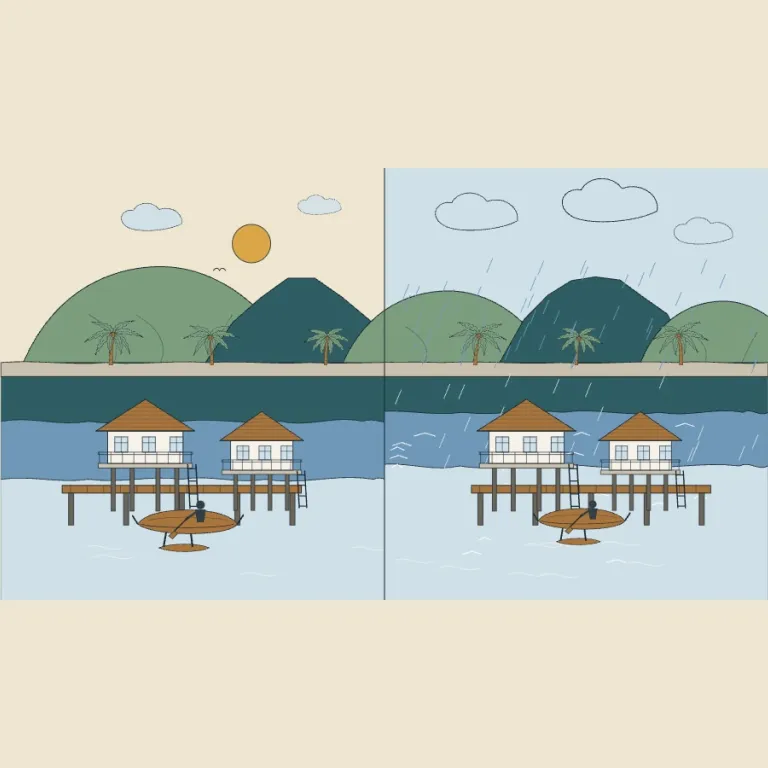
The best time to visit Fiji is July to September, the heart of the dry season, when Nadi averages 80 to 82 °F (27 to 28 °C) and just 43 to 80 mm of rain a month over five to nine rainy days. Fiji sits south of the equator, so its winter is the dry half of the year. Avoid January to March: it is the wettest stretch and the peak of the cyclone season, which the Fiji Meteorological Service runs from November to April. The sea never drops below 80 °F (27 °C). Plan your stay on myfijistay.com.
Fiji at a glance
- Best overall: July to September, dry in the west, low humidity, sea at 80 to 81 °F (27 °C).
- Best value: May and early June, then October, when the weather still holds and arrivals fall away from the August peak.
- Worst months: January to March, the wettest and the cyclone peak. February is also the emptiest month of the year.
- Dry season: May to October. Wet season: November to April, which Fijians call summer.
- Cyclone season: November to April, peak January to March, around two tropical cyclones affecting Fiji per season (Fiji Meteorological Service).
- Warmest water: February and March, at 85 °F (30 °C). Coolest: August, at 80 °F (27 °C).
- Busiest month: August, with 99,737 visitor arrivals in 2025. Quietest: February, with 49,483.
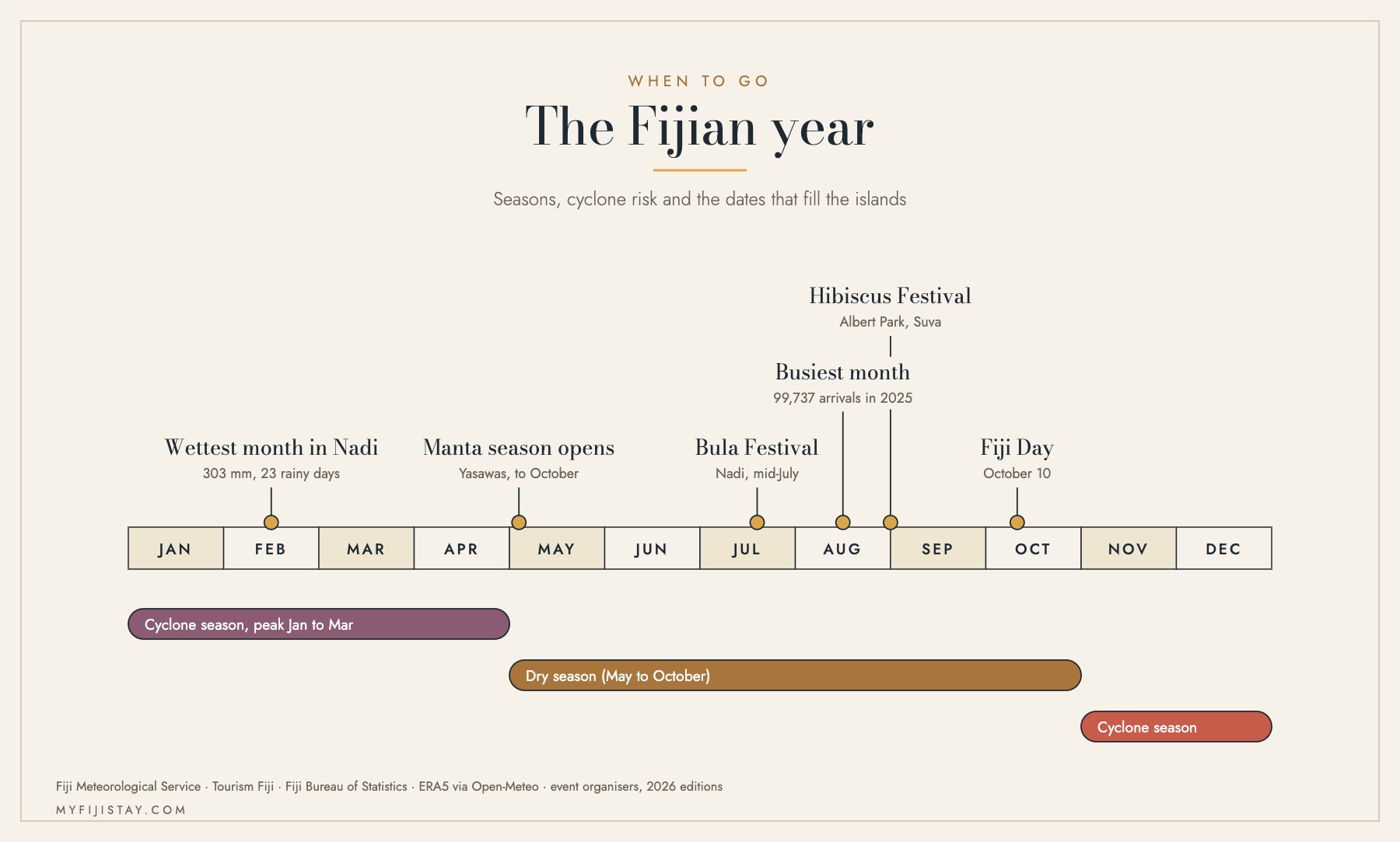
The Fijian year: seasons, cyclone risk and the dates that fill the islands.
Understanding Fiji's climate
Fiji has two seasons, and they are the opposite way round from the northern hemisphere. Tourism Fiji names them plainly: summer runs November to April and is the wet season, winter runs May to October and is the dry one. Average daily temperature sits between about 26 and 31 °C (79 and 88 °F) all year, so the decision is never about heat. It is about rain, humidity and storm risk.
The trade winds cut the big islands in two
The southeast trade winds hit the mountains of Viti Levu and Vanua Levu and drop their rain on the eastern side. The west sits in the rain shadow. The numbers are not subtle. In July, Nadi on the west coast averages 43 mm of rain over 4.7 days; Suva, on the southeast coast of the same island, averages 108 mm over 15.5 days. Suva's driest month is wetter than five of Nadi's twelve. This is why almost every resort island, from the Mamanucas to the Yasawas, sits off the western end of Viti Levu, and why choosing your island decides more about your weather than choosing your month.
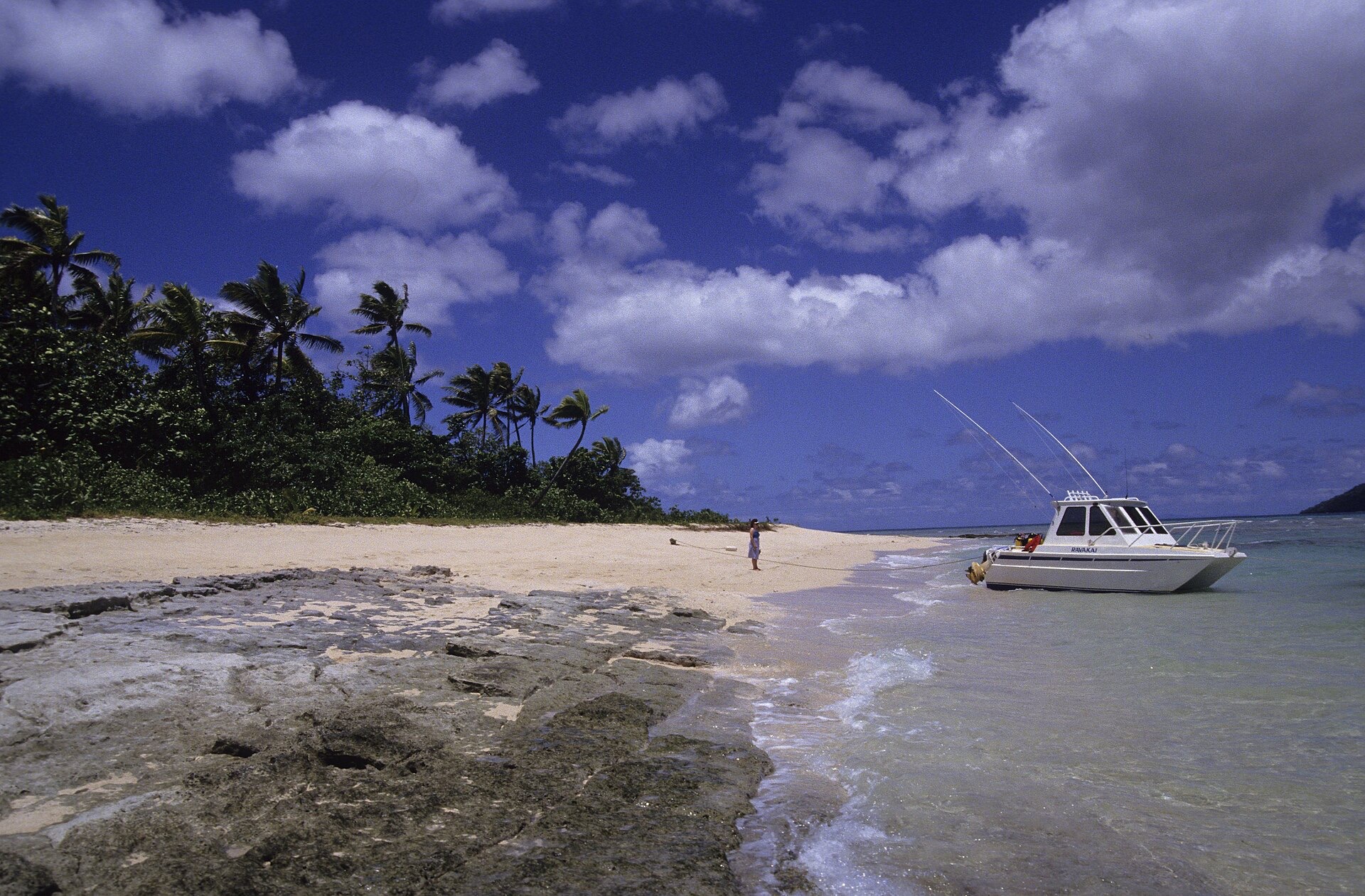
Taveuni. The eastern islands catch the southeast trade winds and stay far wetter than the west all year. Photo : Barry Peters, Wikimedia Commons, CC BY 2.0.

Temperature barely moves, humidity does
Nadi's average high runs from 80 °F (27 °C) in July and August to 85 °F (30 °C) from December to March: a spread of five degrees across the whole year. Nights drop to 69 °F (21 °C) in July, which is why Tourism Fiji tells visitors to pack a light jacket for coastal evenings in the dry season. January and February are the warmest months, July and August the coolest.
The sea is warm every single month
Sea surface temperatures off the Mamanucas and Nadi run from 80 °F (26.7 °C) in August to 85 °F (29.5 °C) in February and March, on 2016 to 2025 averages from NOAA. A three-millimetre shorty is enough in the coolest month, and most snorkelers need nothing at all. Water temperature is never the reason to choose a month in Fiji.
One country, many rainfall regimes
Beyond the west and southeast split, the smaller islands have a more even climate than the two big ones, because they have no mountains to squeeze the trade winds. That is what makes the Mamanucas and the Yasawas usable in shoulder months when Suva is already wet, and it is worth knowing before you weigh up Denarau against the outer islands.
The dry season: May to October
The dry season is the answer for most trips, and in the west it is genuinely dry. Nadi records 43 to 80 mm a month from June through September, over 4.7 to 9.0 rainy days. Tourism Fiji puts the drop at 50 to 75 percent against the wet months. Humidity falls with the rain, the trade winds blow steadily, and visibility on the reefs is at its best.
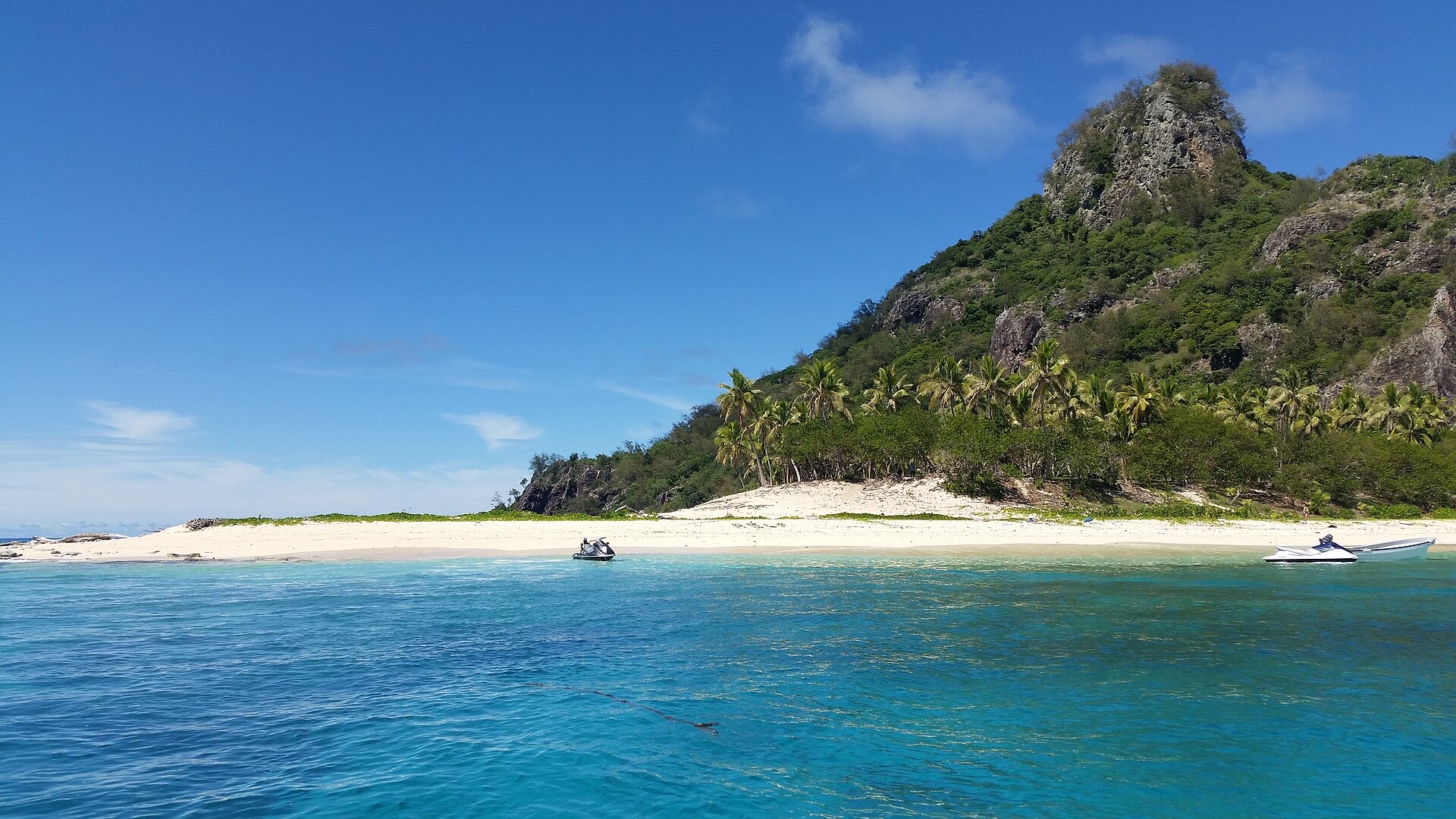
Monuriki, in the Mamanucas. The resort islands sit off the dry western end of Viti Levu. Photo : KhufuOsiris, Wikimedia Commons, CC BY-SA 4.0.

The season is not uniform, and the difference matters when you book.
- May is the value month. Nadi is already down to 75 mm over 8.8 days, the sea still holds 83 °F (29 °C), and Fiji recorded 86,587 arrivals in May 2025 against 99,737 in August. Our note on what actually changes when the dry season starts covers the resort side of it.
- June to August is peak. Arrivals ran 92,693, 99,311 and 99,737 in 2025, the three highest months of the year, pushed by Australian and New Zealand school holidays. July is the driest month in Nadi, at 43 mm over 4.7 days. Book early and expect full properties.
- September is the month to target if you want dry weather without the crowd. Nadi averages 80 mm over 9.0 days, the sea warms back to 81 °F (27 °C), and arrivals fall to 92,344. See what September actually feels like.
- October is the turn. Nadi jumps to 131 mm over 14.6 days and the humidity returns, but arrivals hold at 88,255 and the sea is back to 82 °F (28 °C).
Two practical points for the dry months. The trade winds can be strong enough to move small-boat transfers around, which matters for the Yasawa runs. And July and August are the coolest weeks of the year in the evening, so a light layer is not optional at dinner on the water.
The wet season: November to April
The wet season is not a write-off, but it is a different trip. Nadi records 146 to 303 mm a month from November to March, over 15.9 to 24.4 rainy days. Suva is heavier still, at 204 to 295 mm. Rain usually arrives as an afternoon downpour rather than a full day of drizzle, and mornings are often clear, but the humidity is constant and the ground stays wet.
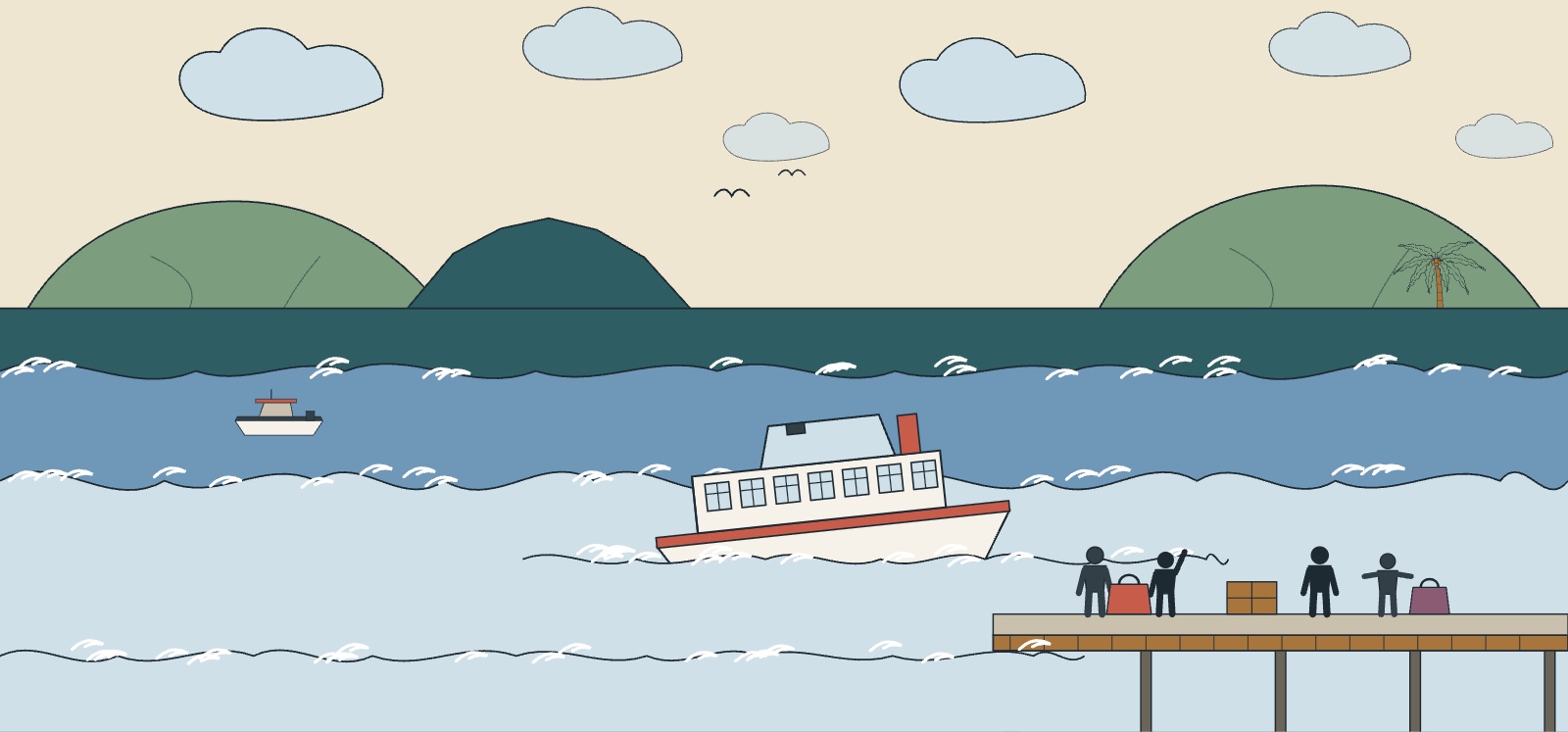
Boat and small-plane transfers to the outer islands are the first services to stop in the wet season. Illustration : Luxury & Premium Hotel Bookings in Fiji.
What the season gives you:
- The warmest water of the year, at 85 °F (30 °C) in February and March.
- The emptiest islands. February recorded 49,483 arrivals in 2025, half the August figure.
- Green landscapes and full waterfalls, which is the one thing the dry season cannot offer.
What it costs you:
- Cyclone risk, which is real and covered below.
- Interrupted transfers. Small planes and boats to the outer islands are the first services to stop when weather closes in, so the wet season is not the time for a tight island-hopping plan.
- Heat and humidity. January and February are the warmest months of the year, with Nadi lows at 75 to 76 °F (24 °C), which means nights do not cool down.
If you are considering these months, read our guides to January, February and travelling in the rainy season before you commit.
Cyclone season: November to April
The tropical cyclone season in the southwest Pacific runs November to April, and the Fiji Meteorological Service states that peak activity normally falls January to March. On average, around two tropical cyclones affect Fiji every season. The service also notes that cyclones have occasionally occurred in October and May, and rarely in September and June, so the shoulder months are not absolutely clear.
The practical rules:
- The safest wet-season weeks are November and early December, before the January to March peak.
- Take insurance that covers weather disruption for any trip between November and April, and check the resort's policy on storm cancellations before you pay.
- Allow a buffer day at Nadi on the way home in the wet season. Outer-island transfers are the first thing to be cancelled and the last to restart.
- Read the seasonal outlook. The Fiji Meteorological Service publishes a tropical cyclone outlook each year before the season opens, with the expected number of systems in Fiji's exclusive economic zone.
Fiji month by month
This table is the year in one view. Air temperature and rain are for Nadi, on the dry west coast where most resorts and the international airport sit. Sea temperature is off the Mamanuca Islands, and the arrivals column is the official count of visitor arrivals published by the Fiji Bureau of Statistics for 2025.
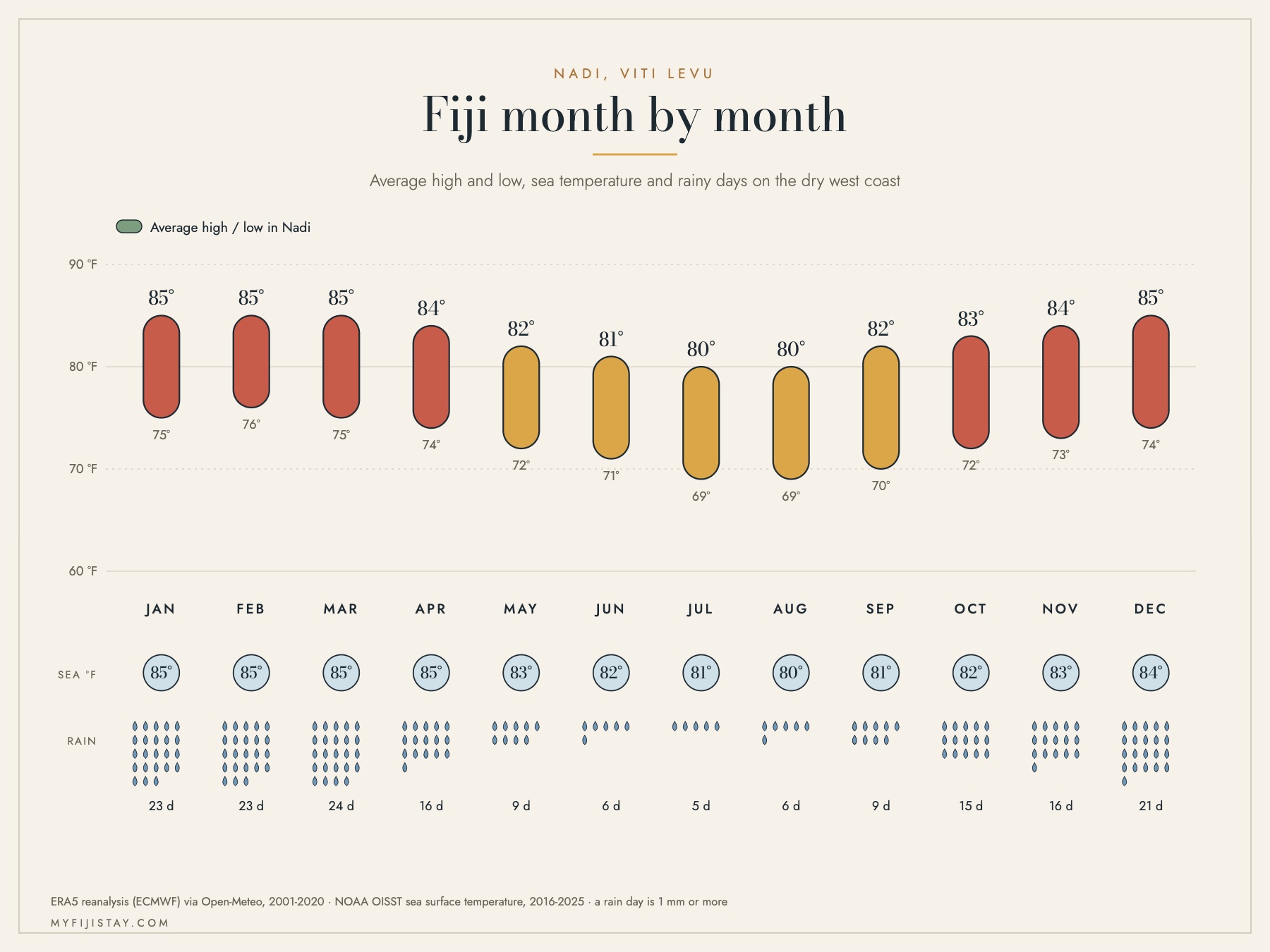
Nadi month by month: air and sea temperature, and rainy days on the dry west coast.
| Month | High / Low °F (°C) | Sea °F (°C) | Rain in (mm) | Rain days | Arrivals 2025 | In three words |
|---|---|---|---|---|---|---|
| January | 85 / 75 (30 / 24) | 85 (29) | 11.7 (296) | 23.1 | 70,794 | Hot, wet, stormy |
| February | 85 / 76 (30 / 24) | 85 (30) | 11.9 (303) | 23.0 | 49,483 | Wettest, emptiest, humid |
| March | 85 / 75 (29 / 24) | 85 (30) | 11.2 (284) | 24.4 | 63,842 | Wet, green, quiet |
| April | 84 / 74 (29 / 24) | 85 (29) | 7.5 (190) | 16.4 | 80,363 | Drying, warm, transitional |
| May | 82 / 72 (28 / 22) | 83 (29) | 3.0 (75) | 8.8 | 86,587 | Dry, warm, value |
| June | 81 / 71 (27 / 22) | 82 (28) | 2.5 (63) | 6.1 | 92,693 | Clear, breezy, busy |
| July | 80 / 69 (27 / 21) | 81 (27) | 1.7 (43) | 4.7 | 99,311 | Driest, coolest, packed |
| August | 80 / 69 (27 / 21) | 80 (27) | 2.8 (70) | 6.5 | 99,737 | Peak, dry, windy |
| September | 82 / 70 (28 / 21) | 81 (27) | 3.1 (80) | 9.0 | 92,344 | Dry, calmer, ideal |
| October | 83 / 72 (28 / 22) | 82 (28) | 5.2 (131) | 14.6 | 88,255 | Warming, wetter, still good |
| November | 84 / 73 (29 / 23) | 83 (29) | 5.7 (146) | 15.9 | 77,963 | Humid, quiet, showery |
| December | 85 / 74 (30 / 24) | 84 (29) | 8.2 (209) | 21.1 | 84,995 | Hot, wet, festive |
Air and rain: ERA5 reanalysis (ECMWF) via Open-Meteo, monthly means 2001-2020, Nadi. A rain day counts 1 mm or more. Sea: NOAA OISST, 2016 to 2025 averages off the Mamanuca Islands and Nadi. Arrivals: Fiji Bureau of Statistics, provisional visitor arrivals, monthly releases 2025, annual total 986,367. Suva and the southeast coast are considerably wetter every month of the year, from 108 mm in July to 295 mm in December.
The best time for what you want to do
Fiji rewards matching the month to the activity, because the reef, the swell and the wildlife calendars do not line up.
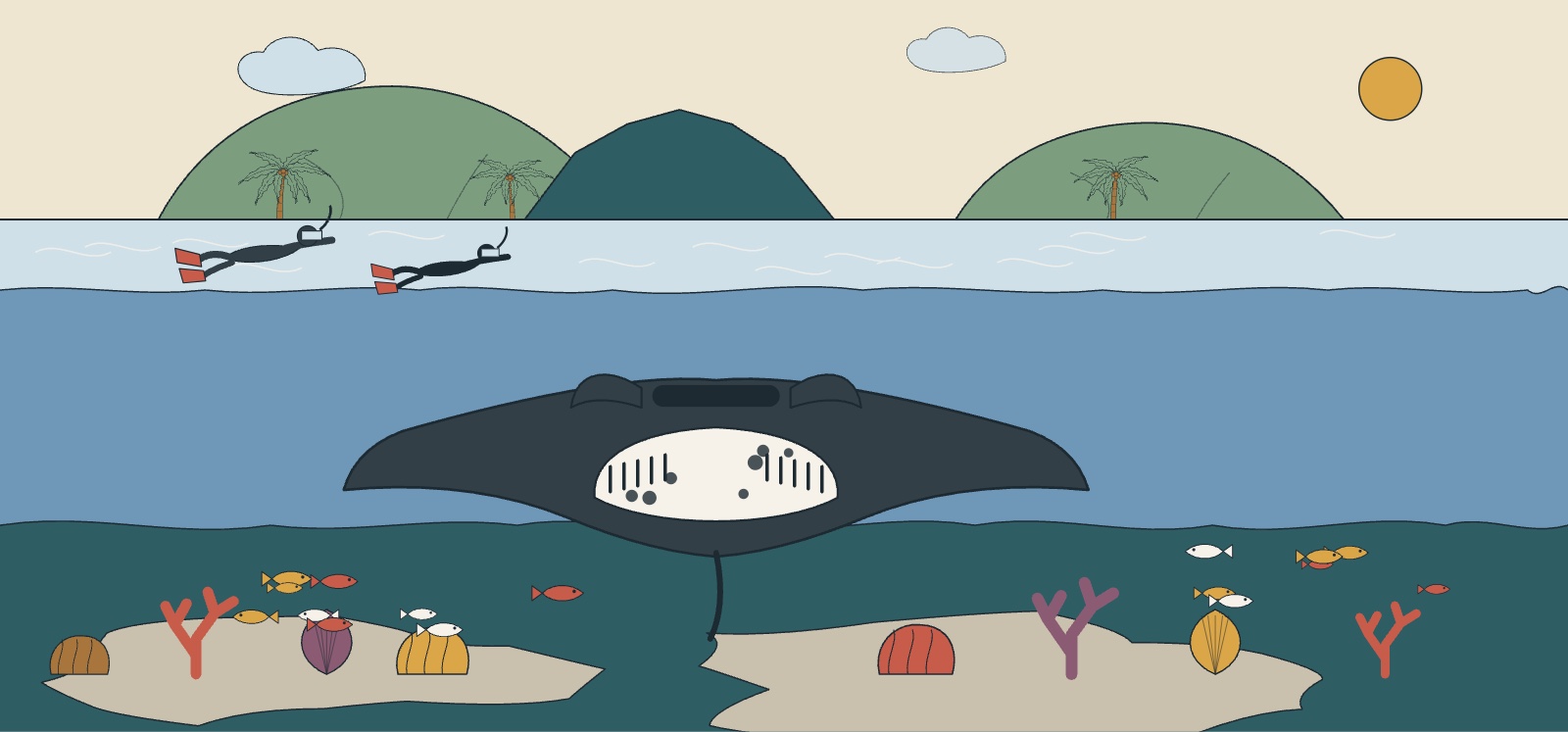
Manta rays gather in the channel between Drawaqa and Naviti islands from May to October. Illustration : Luxury & Premium Hotel Bookings in Fiji.
- Manta rays in the Yasawas: May to October, when plankton is funnelled through the channel between Drawaqa and Naviti islands. Plan at least three nights, because the rays are daily but not guaranteed. Our manta guide has the practical detail.
- Diving and snorkeling: June to October, when runoff is lowest and visibility best. The Rainbow Reef off Taveuni and the bull sharks at Beqa Lagoon both dive year round, but the dry months are cleaner.
- Surfing: April to October, when southern swells reach Cloudbreak, Restaurants and the Namotu line-up. See our surf locations guide.
- Sailing the islands: May to October. The trade winds are steady, and the cyclone window is shut. A crewed catamaran in the Yasawas works best in these months.
- Families: late June to August if school dates decide for you, otherwise May or September for the same weather with fewer people. August is the tightest month for room availability.
- Hiking and waterfalls: April, May or November, when the land is still green from the rains but the tracks have dried out.
- Quiet and low rates: February and March, the two emptiest months, if you accept the rain and the cyclone risk.
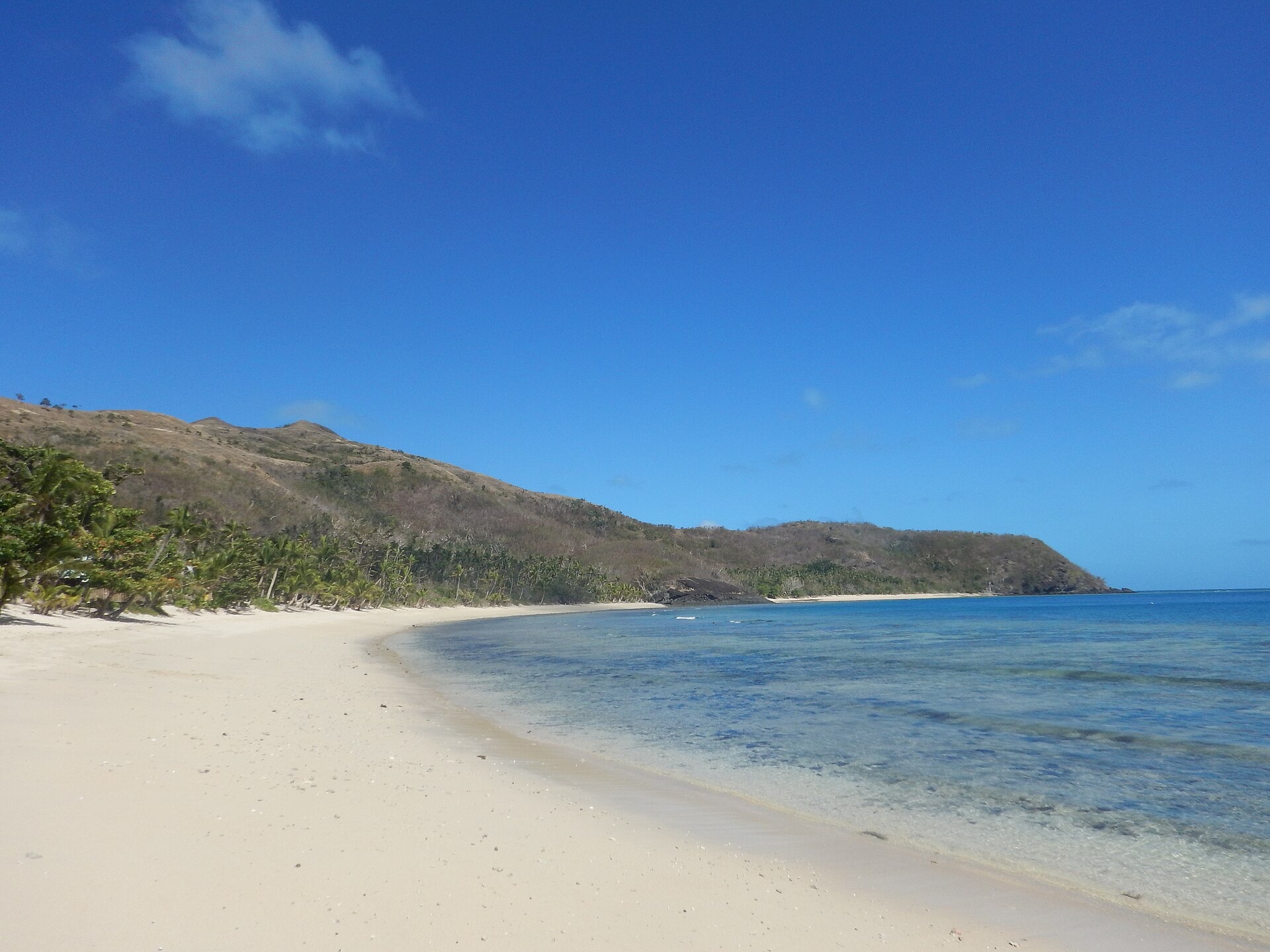
Naviti Island, Yasawas, in August. The manta channel runs between Naviti and Drawaqa. Photo : Rickard Törnblad, Wikimedia Commons, CC BY-SA 4.0.
_-_August_2016.jpg)
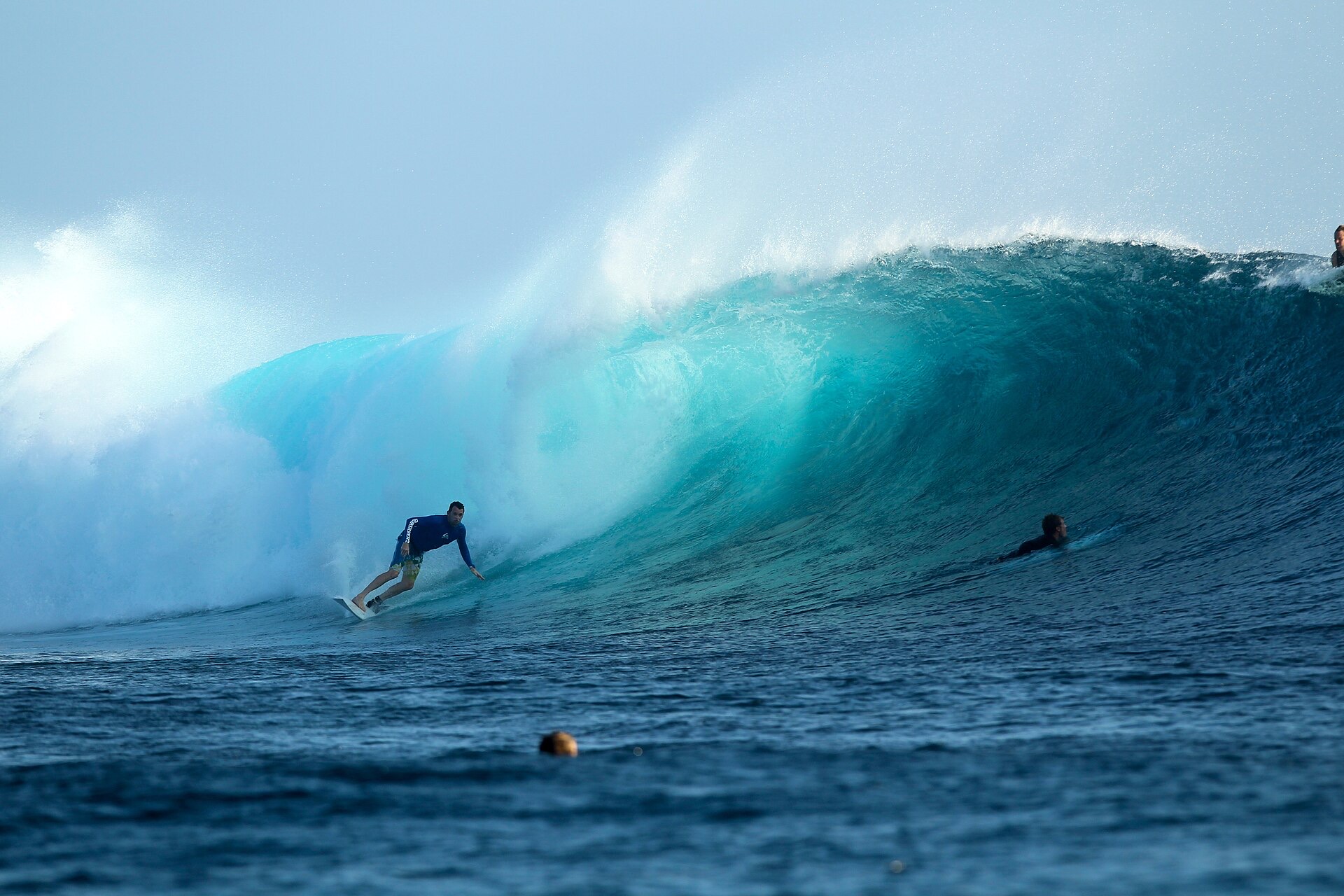
Cloudbreak, off Tavarua. Southern swells reach the Mamanuca reefs from April to October. Photo : dave.fin, Wikimedia Commons, CC BY 3.0.

The arrivals curve below is the clearest crowd signal Fiji publishes, and it explains why July and August prices behave the way they do.
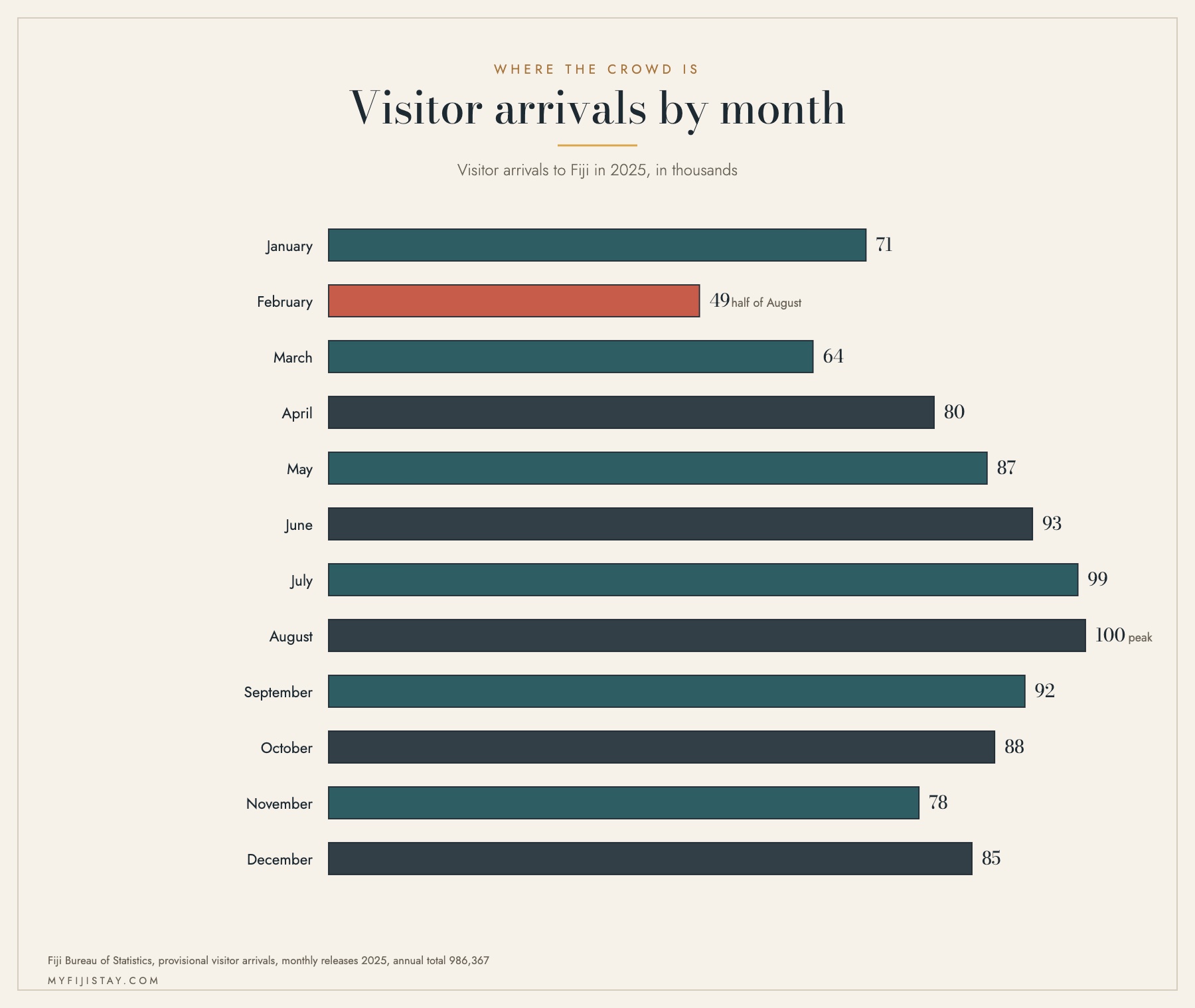
Visitor arrivals by month, 2025: August peaks at 99,737, February falls to 49,483.
Events that shape the year
Fiji's calendar is concentrated in the dry season, which is also when the country is fullest.

The kava ceremony happens year round and is not staged for visitors. Illustration : Luxury & Premium Hotel Bookings in Fiji.
- Bula Festival, Nadi, mid-July. The 2026 edition ran July 18 to 25 at King Charles Park, a week of parades, food stalls and pageantry in the town nearest the international airport.
- Hibiscus Festival, Suva, late August into early September. The 70th edition ran August 29 to September 5, 2026 at Albert Park, eight days long, and it is the country's largest festival.
- Fiji Day, October 10, marking independence in 1970. It closes the week of ceremonies known as Fiji Week.
- Diwali, October or November depending on the lunar calendar, a national public holiday and a major date in Fiji's Indo-Fijian communities.
Away from the calendar, the ritual you are most likely to meet is the kava ceremony, which happens year round and is not a performance laid on for visitors. Our guide to sitting one out properly is worth reading before you arrive.

A kava ceremony. The ritual runs year round, in villages and resorts alike. Photo : Jaejay77, Wikimedia Commons, CC BY-SA 4.0.

Where to stay
The island you choose changes your weather more than the month does, because the west is dry and the southeast is not.
- Viti Levu: the main island, with Nadi and Denarau on the dry west coast and Suva on the wet southeast one.
- The outer islands: the Mamanucas, Yasawas, Taveuni and Kadavu, flatter and more evenly watered than the big islands.
- Sofitel Fiji Resort and Spa, Denarau: on the dry side, twenty minutes from the airport, the simplest base in the wet season when transfers are fragile.
- Oarsman's Bay Lodge, Nacula Island: deep in the Yasawas, within reach of the manta channel between May and October.
- Volivoli Beach Resort, Rakiraki: at the northern tip of Viti Levu, a diving base for Bligh Water, best in the dry months.
- Grand Pacific Hotel, Suva: the 1914 colonial landmark on the capital's waterfront, on the wettest side of the country and the right base for the Hibiscus Festival.
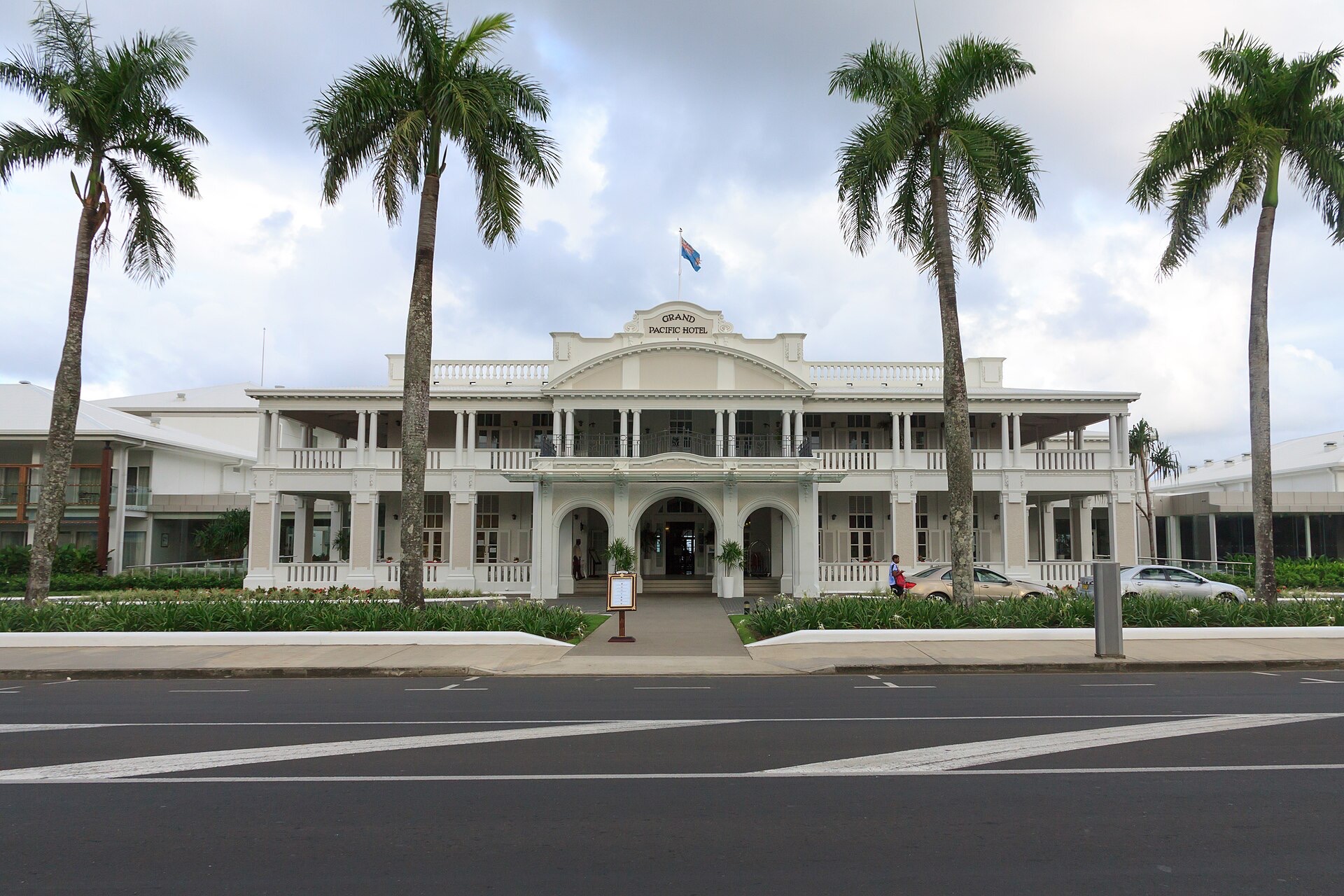
The Grand Pacific Hotel, Suva. The capital sits on the wettest side of the country, at 108 mm even in July. Photo : Matthias Süßen, Wikimedia Commons, CC BY-SA 3.0.

FAQ
What are the best and worst months to go to Fiji?
The best months are July, August and September, when Nadi records 43 to 80 mm of rain over five to nine rainy days and the sea holds 80 to 81 °F (27 °C). The worst are January, February and March: they are the wettest months, at 284 to 303 mm in Nadi, and the peak of the cyclone season.
When is cyclone season in Fiji?
The tropical cyclone season in the southwest Pacific runs from November to April, according to the Fiji Meteorological Service. Around two tropical cyclones affect Fiji in an average season. The service notes that cyclones have occasionally occurred in October and May, and rarely in September and June, so the shoulder months carry a small residual risk.
What month has the most cyclones in Fiji?
Peak tropical cyclone activity normally falls between January and March, the Fiji Meteorological Service states. Those three months are also the wettest of the year in both Nadi and Suva, so the rain and the storm risk peak together. February is the single month combining the highest rainfall in Nadi, at 303 mm, with the peak of the cyclone window.
Which month is the rainiest in Fiji?
February is the rainiest month in Nadi, at 303 mm over 23.0 rainy days, with January and March close behind. On the southeast coast the pattern shifts: Suva peaks in December at 295 mm, and records more than 250 mm in every month from January to April. The driest month anywhere in Fiji is July in Nadi, at 43 mm.
Does Fiji get cold at night?
No, but dry-season evenings are cooler than visitors expect. Nadi averages a low of 69 °F (21 °C) in July and August, the two coolest months of the year, and Suva is similar. Tourism Fiji advises a light jacket for coastal evenings in the dry season. In January and February, lows stay at 75 to 76 °F (24 °C).
When is the quietest time to visit Fiji?
February is the quietest month. Fiji recorded 49,483 visitor arrivals in February 2025, half the August figure of 99,737, according to the Fiji Bureau of Statistics. March, at 63,842, is the second quietest. Both fall inside the wet season and the cyclone peak, which is exactly why demand collapses in those weeks.
Is September a good time to visit Fiji?
September is one of the best months of the year. Nadi averages 80 mm of rain over 9.0 rainy days, highs reach 82 °F (28 °C), the sea warms back to 81 °F (27 °C), and arrivals fall to 92,344 from the August peak of 99,737. It combines dry-season weather with a measurably smaller crowd than July or August.
When is the best time to visit Fiji for snorkeling?
May to October is the best window. Runoff from the rivers is lowest, so visibility on the reefs is at its clearest, and the manta rays gather in the channel between Drawaqa and Naviti islands in the Yasawas through the same months. Water temperature is never the constraint: it ranges only from 80 to 85 °F (27 to 30 °C) across the year.
Read next
- Manta rays in the Yasawas: when to go, where to swim, what to expect
- September in Fiji: why smart travelers are booking the shoulder season now
- Planning your Fiji escape: the best time to go for luxury stays
- When is the best time to book luxury hotels in Fiji
- Which Fiji island is best for your luxury escape