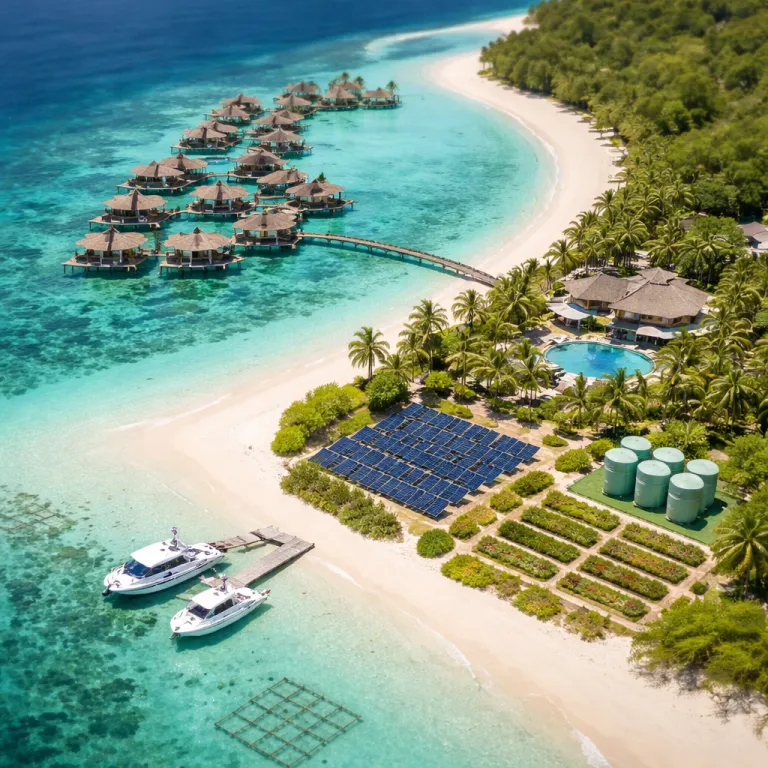
How the Fiji sustainable tourism framework reframes luxury
Fiji is no longer selling only palm trees and plunge pools. The Fiji sustainable tourism framework now asks every luxury property to prove that comfort, culture and conservation can share the same stretch of sand, and that shift is reshaping how serious travelers evaluate five star stays. For guests used to global brands, this national sustainability agenda can feel subtle on the surface yet it is quietly rewriting what qualifies as true premium hospitality in the South Pacific.
The Fiji Government launched the Fiji National Sustainable Tourism Framework as a ten year development roadmap for the tourism industry, positioning it as the core policy reference for Tourism Fiji and the wider visitor economy. It sets four clear goals for tourism development in Fiji tourism: a prosperous visitor economy, thriving inclusive communities, visible valued cultures and healthy islands and oceans, and each goal is backed by sustainable tourism indicators and monitoring systems that matter for every new resort opening. For luxury travelers, this policy framework means that environmental performance, economic impact and cultural respect are no longer optional extras but part of how the national tourism strategy defines quality.
At policy level, the Ministry of Tourism and Civil Aviation in Suva now links tourism civil aviation decisions, such as new routes or seaplane bases, to environmental and disaster risk reduction criteria that echo the framework’s guidance. That ministry tourism stance directly affects where high end resorts can be built, how marine access is managed and how coral reefs are protected from overuse, and it pushes the private sector to plan for long term climate change risk rather than short booking cycles. When you book, you are stepping into a live experiment in sustainable development where government, local communities and international partners are trying to balance growth with fragile ecosystems.
The framework is not just about environmental safeguards around marine parks and beaches. It also targets economic growth that genuinely benefits local communities, including indigenous landowners whose villages sit behind many of the most photogenic bays in Fiji. For luxury operators, that means new expectations on local hiring, local supply chains and transparent community support, and for guests it means your stay can either reinforce or undermine the national sustainable vision depending on which property you choose.
Where the framework bites: operations, audits and new openings
On the ground, the Fiji sustainable tourism framework is already visible in how leading resorts manage water, waste and energy. Properties that take the national sustainable agenda seriously are mapping every waste stream from the bar to the back of house, then investing in composting, glass crushing and greywater systems that reduce pressure on local communities and fragile islands. When you tour a resort, ask to see where the rubbish goes and how water is treated, because genuine sustainable development is rarely glamorous but always traceable.
A concrete example is the phased upgrade of water and waste infrastructure at a well known Mamanuca Islands resort between 2018 and 2022, where independent environmental consultants documented the shift from septic tanks to a tertiary treatment plant, on site glass crushing and expanded composting. Audit summaries shared with the Ministry of Tourism and Civil Aviation and the Department of Environment reported measurable reductions in nutrient discharge and landfill volumes, and those findings were later referenced in the resort’s sustainability reporting and financing discussions with development partners. Case studies like this show how the tourism framework can translate into engineering decisions, capital expenditure and verifiable outcomes rather than slogans.
The Ministry of Tourism and Civil Aviation has made it clear that luxury tourism development must align with environmental and social safeguards. New projects, including headline names like the Westin and other international brands, are expected to show how their designs protect marine habitats, reduce disaster risk and support local communities over the long term. If you are tracking future openings, read the official environmental impact summaries and audit findings as closely as you read the spa menu, because they reveal whether a project is built around the tourism framework or merely decorated with green language.
Compliance, however, is uneven across the tourism industry. Indigenous owned island retreats and community run eco focused lodges often started from a sustainable tourism mindset, so aligning with the Fiji national framework feels natural and their development choices already reflect local values. Large global chains, by contrast, may have strong corporate policies yet still need to rework procurement, training and marine management to match local expectations, and that gap will be most obvious in how they handle coral reefs, village partnerships and staff housing.
The oversight question remains the weakest link in the Fiji sustainable tourism framework. Monitoring systems exist on paper, but independent audits of luxury properties are still patchy and often rely on self reporting by the private sector rather than rigorous third party checks. In recent years, several resorts have faced enforcement notices and improvement orders following environmental impact assessments and compliance inspections, including cases where unapproved coastal works or inadequate wastewater treatment triggered requirements for remedial action and closer reporting to regulators. When you see a resort marketing itself as a leader in Fiji tourism sustainability, ask who verified the claim, how often they report to government and whether any penalties exist for missing national sustainable targets.
For travelers eyeing the next wave of openings, this matters. A property like the Westin on Denarau, profiled in this honest first read on the Westin Fiji opening, will be judged not only on brand standards but on how deeply it integrates the tourism framework into daily operations. The smartest guests will compare how different countries handle sustainable tourism and then reward the Fijian operators who turn policy into practice rather than marketing copy.
What luxury guests should now look for in Fiji
For a business leisure traveler landing in Nadi after meetings in other countries, the Fiji sustainable tourism framework can be a practical filter rather than abstract policy. Start with location and ask how the resort protects its stretch of coast and nearby coral reefs, because marine health is the clearest test of whether a property treats sustainable tourism as a core value or a brochure line. If the team can explain their reef monitoring, fishing limits and cyclone preparedness in plain language, you are likely in a place that understands disaster risk and long term stewardship.
Next, look at how the property engages with local communities and the wider tourism industry. Genuine partnerships go beyond a token village visit to include local hiring at all levels, procurement from nearby farms and artisans, and structured support for education or climate change adaptation projects that align with the national sustainable agenda. When staff speak proudly about their village, their training and their career path within Tourism Fiji, you are seeing the framework’s inclusive economic development goals in action rather than in a policy document.
Cultural programming is another sharp lens for evaluating Fiji tourism through this framework. Resorts that treat Fijian culture as a nightly show are out of step with a national sustainable vision that calls for visible valued cultures embedded in daily life, not staged for cameras. Ask who designs the cultural experiences, how local elders are consulted and whether ceremonies are adjusted for environmental realities such as tides, and you will quickly sense whether respect or performance is driving the schedule.
Physical design choices also reveal how seriously a property takes sustainable development. Look for low rise buildings that follow natural contours, generous setbacks from the high tide line and landscaping with native species that support biodiversity and reduce water use, because these details show alignment with environmental guidance from the ministry tourism équipe. When a resort explains how its layout reduces disaster risk from cyclones and storm surges, you are hearing the tourism framework translated into architecture and risk reduction rather than just décor.
To make this easier on the ground, use a simple arrival checklist: ask about reef protection and fishing rules, request a quick tour of waste and water systems, check how many staff are locally hired, scan cultural activities for community leadership and confirm whether the property reports against the national sustainable tourism framework. Our guide to Fiji’s June luxury openings and when to book or wait highlights which new properties are already engaging with the Fiji national sustainable agenda and which are still catching up. Use that kind of intelligence to align your spend with operators who treat sustainable tourism as a competitive advantage, because in a crowded global market, those are the places that will age well.
FAQs: Fiji sustainable tourism framework and luxury resorts
How does the Fiji National Sustainable Tourism Framework affect five star hotels? It sets national expectations on climate resilience, community benefits, cultural heritage and biodiversity, so luxury resorts are now assessed on more than design and service alone. Where can travelers find primary data on Fiji tourism performance? Official statistics on tourism’s share of GDP and annual arrivals are published by the Fiji Bureau of Statistics and referenced by the Ministry of Tourism and Civil Aviation in policy summaries. Are there independent checks on resort sustainability claims? Environmental impact assessments, compliance inspections and periodic audits by regulators and development partners provide external scrutiny, although coverage is still uneven across the industry.
The 2034 horizon: success, failure and what it means for you
By the end of the current Fiji sustainable tourism framework period, success will not be measured only in arrival numbers or new infinity pools. A genuinely prosperous visitor economy would show strong tourism growth alongside healthier coral reefs, more resilient villages and a tourism industry where local communities hold meaningful roles in ownership and management. If you return to the same island over a decade and see cleaner beaches, stronger cultural programs and staff who have advanced into leadership, you are witnessing the framework working as intended.
Failure, on the other hand, would be easy to spot for any frequent flyer into the South Pacific. If climate change impacts outpace adaptation, if marine ecosystems degrade despite glossy sustainability reports and if economic benefits remain concentrated in a few international holdings, then the national sustainable experiment will have fallen short. In that scenario, luxury would feel increasingly fragile, with more disaster risk disruptions, higher insurance costs and a thinning sense of authenticity in once vibrant communities.
The stakes are high because tourism already contributes a large share of Fiji’s GDP and supports thousands of jobs across islands. Official figures from the Fiji Bureau of Statistics show that tourism contributes 39 percent of national GDP and welcomes around 900 000 visitors annually, and those numbers give the Ministry of Tourism and Civil Aviation both leverage and responsibility when steering tourism development. As one policy summary from the Fiji National Sustainable Tourism Framework puts it, "Fiji's National Sustainable Tourism Framework guides tourism towards sustainability."
For travelers, the most powerful lever is still choice. When you prioritize properties that align with the tourism framework, ask hard questions about environmental management and reward transparent reporting, you send a clear signal to both government and the private sector that sustainable development is not a niche preference. Over time, that demand can help close the oversight gap, encourage better data on risk reduction and ensure that the next generation of high end resorts treats healthy islands and oceans as the ultimate luxury amenity.
There is also a quieter reward for those who lean into this national sustainable journey. Properties that work closely with local communities tend to unlock access to more meaningful experiences, from reef restoration outings with marine biologists to village led hikes that reveal the cultural landmarks behind the views featured in our guide to Fiji landmarks that elevate every luxury hotel stay. In that sense, aligning your booking with the Fiji sustainable tourism framework is not only an ethical choice but a way to deepen the quality of your time in Fiji.
Key figures shaping Fiji’s sustainable luxury tourism
- Tourism contributes 39 percent of Fiji’s Gross Domestic Product, according to the Fiji Bureau of Statistics, which means any shift driven by the Fiji sustainable tourism framework has direct national economic implications.
- Annual tourist arrivals are around 900 000 people, based on Fiji Bureau of Statistics data, so even small improvements in sustainable tourism practices at luxury properties can scale into significant environmental and community benefits.
- The National Sustainable Tourism Framework runs over a ten year period, from launch to its planned conclusion, giving luxury operators a clear long term horizon for investments in climate change adaptation, disaster risk reduction and community partnerships.
- Framework objectives explicitly combine community well being, equitable opportunities, cultural heritage protection and biodiversity conservation, which means luxury resorts are now assessed on more than four separate pillars rather than just financial performance.
- Key partners such as the International Finance Corporation and the Global Green Growth Institute support implementation, signaling that Fiji’s tourism development is plugged into wider international efforts to align the tourism industry with global sustainable development goals.